
Beyond "Hey AI": Mastering the Art of Prompt Engineering in 2026

The digital landscape has shifted. We no longer just "search" for information; we collaborate with intelligence. As we navigate the era of models like GPT-5, Claude 4.6, and Gemini 2.5, the barrier between a mediocre output and a revolutionary breakthrough isn't the AI's capability—it's the quality of the prompt. Writing a better prompt is no longer just a "hack" for tech enthusiasts; it has become the most valuable skill of the mid-2020s, a form of "digital whispering" that unlocks the true potential of silicon-based reasoning.
The Foundation: Moving Beyond Basic Instructions
Most users treat AI like a sophisticated Google search bar. They type in a few keywords and hope for the best. However, the most effective prompts are structured more like a professional brief given to a highly talented but literal-minded consultant. To get the most out of modern AI, we must move beyond the "command" and embrace the "context."
The Core Pillars of a Great Prompt
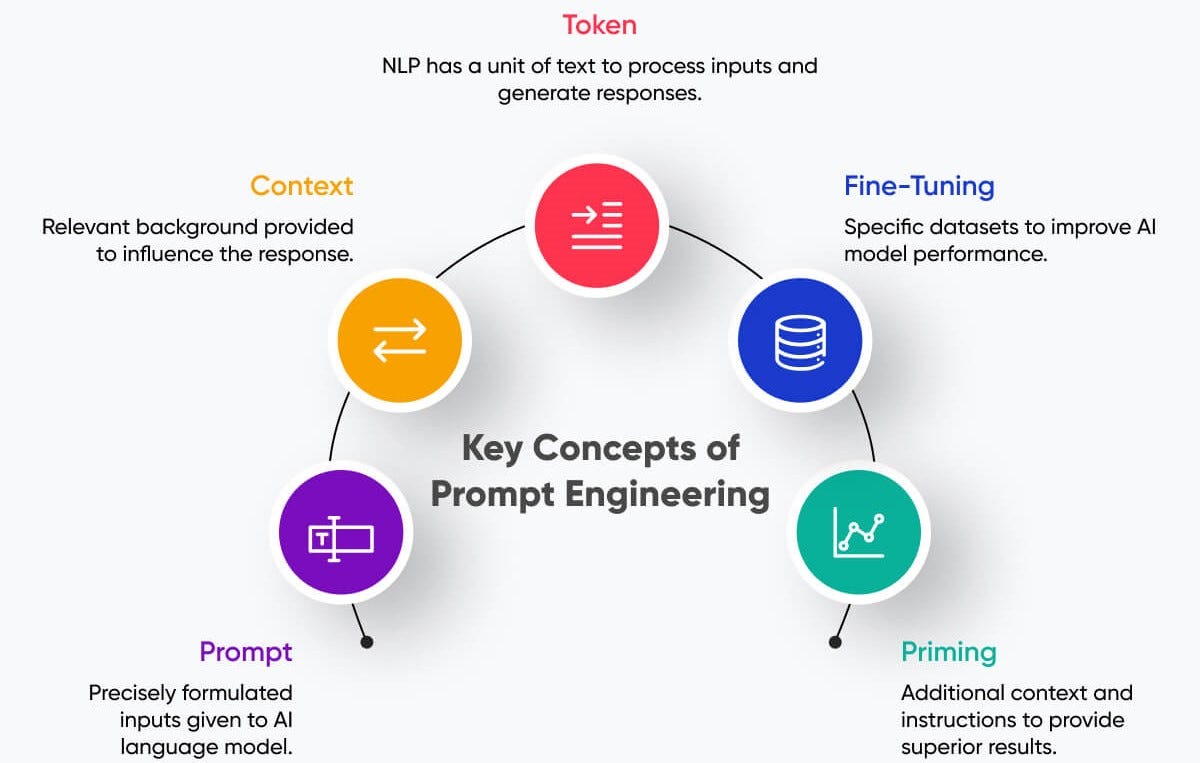
Every high-performing prompt rests on three fundamental pillars: Clarity, Context, and Constraints.
1. Clarity: Vague requests yield vague results. Instead of saying "Write a story," specify the genre, tone, and key plot points. The more precise your verbs and nouns, the less the AI has to guess.
2. Context: AI models don't know who you are or what your ultimate goal is unless you tell them. Are you a marketing executive writing for a C-suite audience? Or a high school teacher explaining physics to teenagers? Providing this background information changes the "latent space" the AI navigates to find its answers.
3. Constraints: Often, what you don't want is just as important as what you do. Setting boundaries—such as word counts, forbidden topics, or specific formatting requirements—forces the AI to focus its creative energy within a defined playground.
Advanced Frameworks: How the Pros Prompt
As AI models have evolved, so have the techniques used to guide them. In 2026, we have moved past simple one-liners into structured frameworks that leverage the way neural networks actually "think."
Chain of Thought (CoT): The Power of Slow Thinking
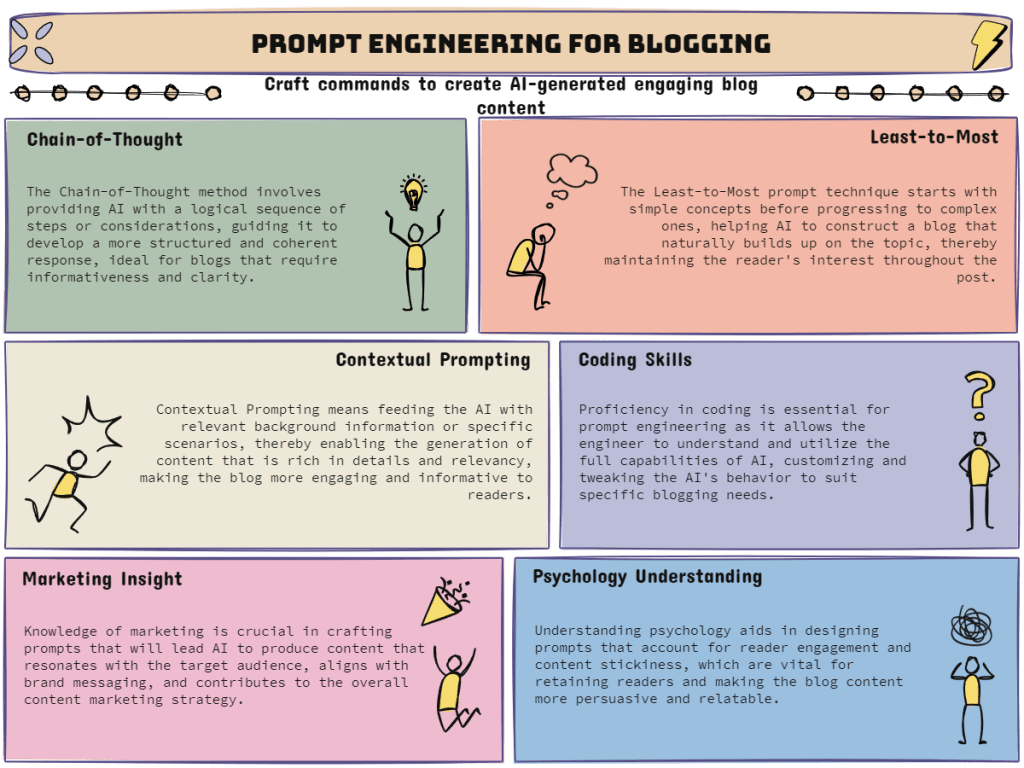
One of the most significant breakthroughs in AI interaction is Chain of Thought (CoT) prompting. Instead of asking for a final answer immediately, you instruct the AI to "think step-by-step." This mimics human cognitive processes, allowing the model to decompose complex problems into manageable chunks.
For example, if you ask an AI to solve a complex logistics problem, a standard prompt might lead to a calculation error. However, by adding the phrase "Let's break this down step-by-step and verify each stage before moving to the next," you trigger a reasoning mode that significantly reduces hallucinations and improves accuracy.
Few-Shot Prompting: Show, Don't Just Tell
While AI models are incredibly knowledgeable, they often need a "template" to understand your specific stylistic preferences. This is where Few-Shot Prompting comes in. Instead of describing a complex format, you provide 2-3 examples of the input and the desired output.
Pro Tip: When using few-shot prompting, ensure your examples are diverse. If you're teaching an AI to write product descriptions, provide one example of a luxury item, one of a budget item, and one of a technical tool. This helps the model understand the underlying pattern rather than just mimicking one specific style.
Tree of Thoughts (ToT): Exploring Multiple Realities
For tasks that require strategic planning or creative brainstorming, the Tree of Thoughts framework is the gold standard. Instead of following a single linear path, you ask the AI to generate three different potential solutions, evaluate the pros and cons of each, and then proceed with the most promising one. This multi-path exploration is particularly effective for high-stakes decision-making or complex software architecture.

Tailoring Your Approach: GPT vs. Claude vs. Gemini
In 2026, the "Big Three" AI families have distinct personalities. A prompt that works perfectly for one might need slight adjustments for another.
GPT-5: The Versatile All-Rounder
OpenAI's flagship model thrives on structure and explicit instructions. It is particularly good at following complex system prompts and integrating with external tools. When prompting GPT-5, use clear headers and bullet points to organize your request. It responds well to "personas"—telling it to act as a world-class editor or a senior developer often yields a noticeable jump in quality.
Claude 4.6: The Nuanced Intellectual
Anthropic's Claude is widely regarded as the most "human-like" in its writing style. It has a massive context window (often up to 1 million tokens), making it the king of long-form document analysis. Claude responds exceptionally well to "the why." If you explain the reasoning behind your request, Claude will often provide a more thoughtful and ethically grounded response.
Gemini 2.5: The Multimodal Master
Google's Gemini excels when you mix media. Its native multimodality means you can prompt it with a combination of text, images, and video snippets. When working with Gemini, don't be afraid to say, "Look at the chart in this image and compare its data to the text I've provided below." It is the most "observational" of the current models.
The Psychology of the Persona: Why Role-Playing Works
One of the most effective ways to improve AI output is to assign the model a Persona. This isn't just a gimmick; it's a way to narrow the AI's focus. When you tell an AI to "Act as a cynical tech journalist with 20 years of experience," you are effectively telling it to prioritize certain vocabulary, sentence structures, and viewpoints while discarding others.
How to Build a Powerful Persona
A good persona prompt should include:
• Expertise: What is their professional background?
• Tone: Are they witty, academic, blunt, or encouraging?
• Goal: What is their primary motivation in this interaction?
• Audience: Who are they talking to?
Instead of "Write a workout plan," try: "You are a world-renowned longevity coach who specializes in high-intensity interval training for busy professionals. Your tone is motivating but data-driven. Design a 20-minute morning routine that requires no equipment and focuses on cardiovascular health."
Common Pitfalls: What to Avoid
Even seasoned prompters fall into traps that lead to robotic or inaccurate content.
The "Wall of Text" Problem
If your prompt is too long and unorganized, the AI might suffer from "middle-loss"—forgetting the instructions in the center of the prompt while focusing only on the beginning and the end. Use Markdown headers (#, ##) and clear delimiters (like --- or """) to separate different parts of your prompt.
Over-Specification
While context is good, micro-managing the AI can stifle its creative reasoning. If you tell it exactly what to say in every paragraph, you're not using an AI; you're using a typewriter. Give it the "what" and the "who," but let the model figure out the "how."
Ignoring the "Negative Prompt"
We often forget to tell the AI what not to do. If you're tired of hearing the phrase "In today's fast-paced world," tell the AI: "Avoid clichés, overused business jargon, and generic introductory phrases."
Real-World Transformations: Before and After
To see the power of better prompting, let's look at a common use case: Summarizing a meeting.
The Basic Prompt:
"Summarize the transcript of this meeting."
Result: A dry, bulleted list of everything that was said, often missing the "big picture."
The Professional Prompt:
"Act as an executive assistant. I will provide a transcript of a product strategy meeting. Your goal is to extract three things:
1. Key decisions made.
2. Unresolved questions that need follow-up.
3. A prioritized list of action items with assigned owners.
Write this in a concise memo format suitable for the CEO. Avoid mentioning small talk or administrative tangents."
Result: A high-value, actionable document that saves the user hours of work.
The Iterative Loop: The Secret of "Prompt Refinement"
The best prompts are rarely written on the first try. Prompt engineering is an iterative process. If the AI gives you a result that's almost right but not quite there, don't start over. Instead, give it feedback.
• "This is good, but make the tone more professional."
• "The second paragraph is too long; can you condense it?"
• "You missed the point about the budget; please re-incorporate that."
This "conversation" with the AI is where the real magic happens. By treating the interaction as a collaborative dialogue rather than a one-way command, you refine the model's understanding of your specific needs.
The Future: Prompting Without Prompts?
As we look toward the late 2020s, the nature of prompting is changing again. We are seeing the rise of "Agentic Workflows," where the AI prompts itself. You give it a high-level goal—"Research this company and prepare a briefing deck"—and the AI breaks that down into dozens of sub-prompts, executes them, and compiles the result.
However, even in an agentic world, the Intent still comes from the human. The ability to articulate exactly what you want, with the right context and constraints, will remain the ultimate leverage.
Conclusion: Becoming an AI Architect
Mastering prompt engineering isn't about memorizing a list of magic words. It's about developing a new way of thinking—a blend of logic, linguistics, and empathy for how a machine processes information. By focusing on clarity, leveraging advanced frameworks like Chain of Thought, and understanding the unique strengths of different models, you transform from a casual user into an AI architect.
The tools of 2026 are more powerful than ever before. But like any tool, their effectiveness is limited by the hand that wields them. Start experimenting today. Move beyond the basic commands. Give your AI a persona, a purpose, and a path. You'll find that the "better prompt" isn't just about getting a better answer—it's about unlocking a whole new level of human-AI collaboration.