
Unlocking Academic Superpowers: The Essential AI Toolkit for Every Student
In the dynamic landscape of modern education, students are constantly seeking innovative ways to enhance their learning, streamline their workflows, and gain a competitive edge. The advent of Artificial Intelligence (AI) has ushered in a transformative era, offering a suite of powerful tools that are redefining academic productivity and personal growth. Far from being a mere technological fad, AI has become an indispensable ally for students navigating the complexities of higher education and preparing for future careers.
This article delves into the best AI tools available for students today, exploring how these intelligent assistants can revolutionize everything from writing and research to organization and specialized problem-solving. We will examine the core benefits of integrating AI into academic life, address the crucial aspects of responsible AI use, and provide a comprehensive guide to the essential AI toolkit that every student should consider adopting.
The AI Revolution in Education: A New Era of Learning
The integration of AI into higher education is no longer a futuristic concept; it is a present reality. Recent surveys indicate a significant surge in AI adoption among students and institutions alike. For instance, a 2025 survey revealed that AI use among students is nearly universal, with 92% reporting its use, marking a 6% increase from the previous year.
This widespread embrace signifies that AI has moved beyond experimental phases and is now strategically integrated into the educational fabric.
The benefits of this AI revolution are multifaceted, touching upon critical areas of student life:
• Boosted Productivity: AI tools excel at automating mundane and time-consuming tasks, freeing up valuable student time. From note-taking to presentation design, AI handles the heavy lifting, allowing students to focus on deeper learning and critical thinking .
• Enhanced Accessibility: AI plays a pivotal role in making education more inclusive. Tools that transcribe audio in real-time or provide personalized learning paths can significantly benefit students with diverse learning needs or those for whom English is not their first language .
• Accelerated Skill Development: AI offers immediate feedback and personalized guidance, highlighting areas of strength and weakness. This continuous feedback loop helps students refine their skills, whether in writing, problem-solving, or research, without waiting for traditional grading cycles .
• Personalized Learning: AI tools can adapt to individual learning paces and styles, delivering tailored content and explanations. They can elaborate on complex topics when a student struggles or accelerate the pace when a concept is quickly grasped, ensuring an optimized learning experience .
However, with great power comes great responsibility. The ethical use of AI in academia is a paramount concern. Students must understand that AI is a tool for augmentation, not a substitute for original thought or academic integrity. The goal is to leverage AI to enhance learning and productivity, not to bypass the learning process itself. This necessitates a mindful approach, focusing on critical thinking, verification of AI-generated content, and proper attribution where applicable.
Navigating the AI Toolkit: Essential Categories for Students
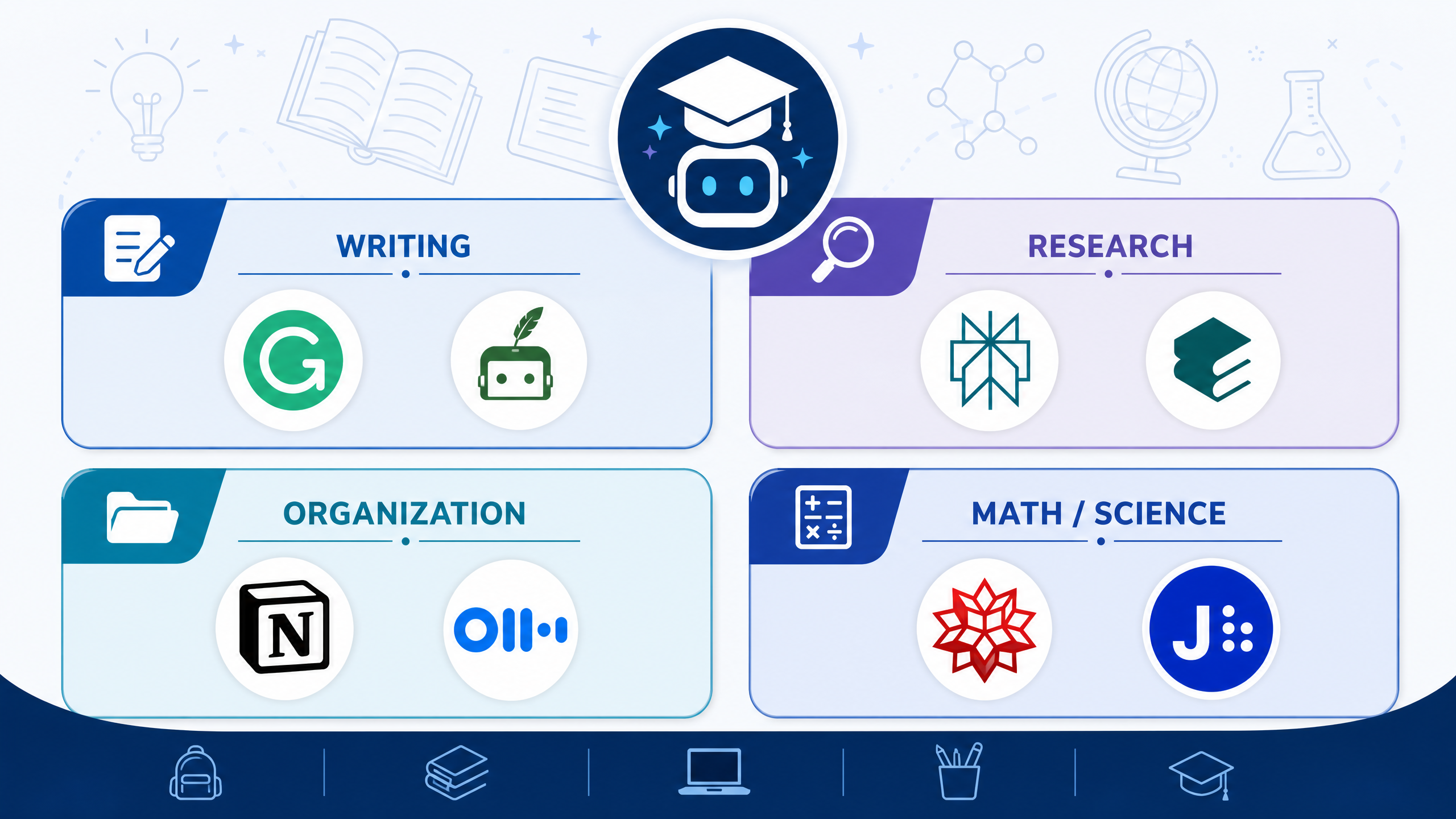
To effectively harness the power of AI, it's helpful to categorize the vast array of tools based on their primary functions. Here, we explore key categories and highlight some of the most impactful AI tools for students.
Writing & Language Enhancement
Effective communication is fundamental to academic success. AI writing assistants go beyond basic spell-checking, offering sophisticated support for grammar, style, and clarity.
• Grammarly: More than just a spell-checker, Grammarly's AI provides real-time suggestions for grammar, syntax, sentence structure, and word choice. It helps maintain a consistent tone, spots repetition, and can even identify missing citations. The premium version offers plagiarism checks and advanced tone customization, making it invaluable for essays and dissertations .
• QuillBot: This AI-powered paraphrasing tool helps students rephrase text while preserving the original meaning, aiding in originality and vocabulary development. It features a plagiarism checker, a
summarizer for condensing long texts, and a translator supporting multiple languages, making it particularly useful for international students .
Research & Information Synthesis
Research is a cornerstone of academic work, and AI tools are revolutionizing how students discover, organize, and synthesize information.
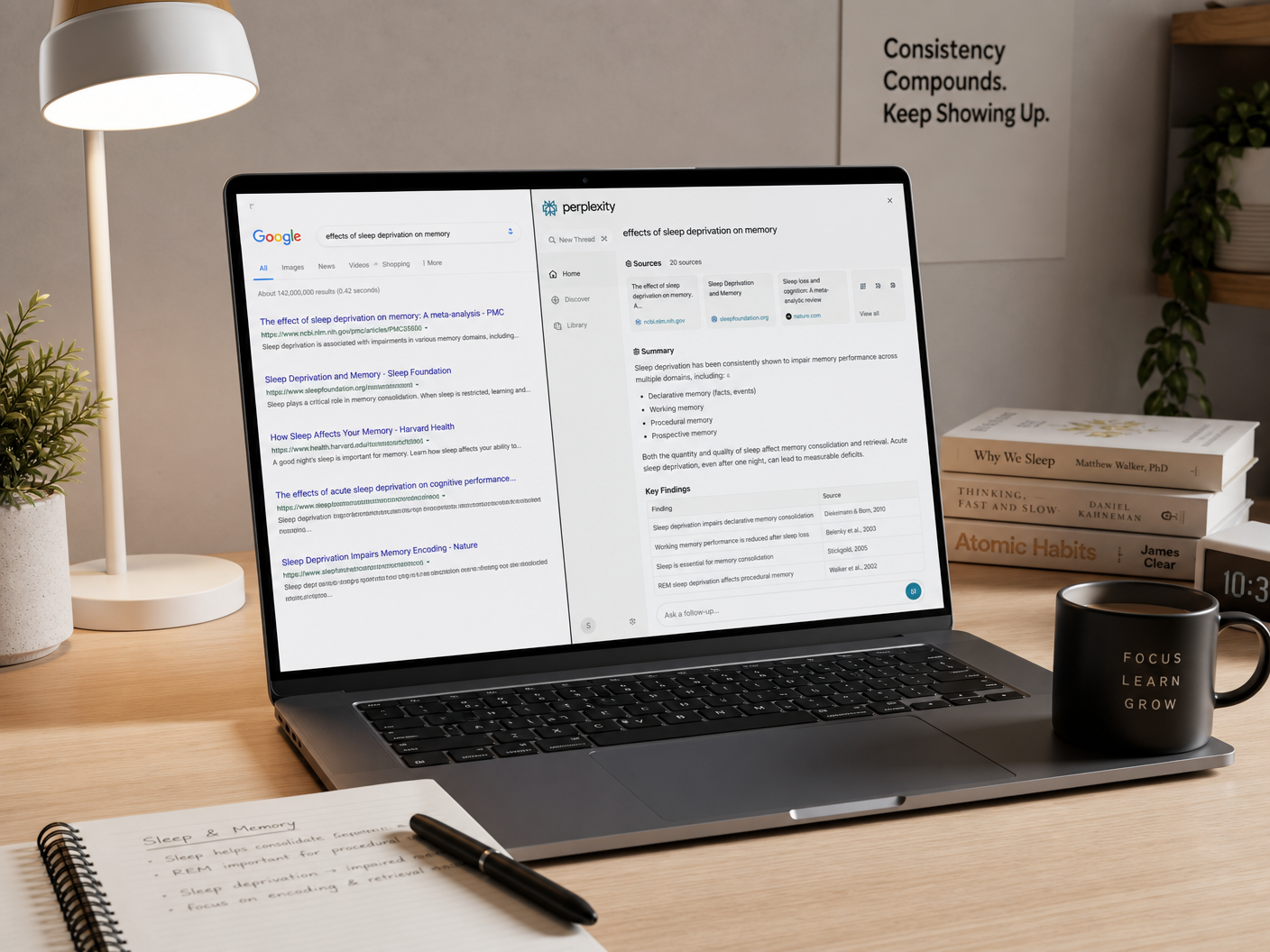
• Perplexity AI: This AI chatbot acts as an advanced research assistant, analyzing and summarizing reputable websites to provide concise answers to research questions. It links directly to sources, saving time and ensuring the use of current and accurate information .
• Elicit: Designed specifically for literature reviews, Elicit uses AI to search academic databases, summarize papers, and present findings in a structured table. It extracts key details like methods and outcomes, allowing students to compare studies quickly and efficiently .
• Julius AI: For data-focused research, Julius AI turns connected datasets into charts, summaries, and scheduled reports. It allows students to explore metrics through natural language without needing to write complex code, making data analysis more accessible .
Organization & Productivity
Managing schedules, notes, and projects is a constant challenge for students. AI-powered organizational tools offer intelligent solutions to keep everything on track.
• Notion AI: Notion is an all-in-one workspace that integrates AI to help students note-take, plan, and execute projects. It can generate summaries of lecture notes, create study habit trackers, manage research databases, and facilitate group collaboration .
• Otter.ai: This AI-powered transcription tool records and transcribes lectures and seminars in real-time. It allows students to focus on active listening rather than frantic note-taking. Otter also generates big-picture summaries of recordings, making it easier to review key information when preparing for exams .
Specialized Learning & Problem Solving
Beyond general writing and research, AI tools cater to specific subjects and learning needs, offering personalized tutoring and problem-solving capabilities.
• TutorAI: This personalized tutoring tool provides real-time support across multiple subjects. It can break down complex concepts step-by-step, generate flashcards and practice problems, and provide feedback on assignments, allowing students to learn at their own pace .
• Wolfram Alpha: For students tackling math, physics, or economics, Wolfram Alpha is an invaluable resource. It explains complicated equations with intuitive steps, providing detailed explanations for each answer, ensuring students understand the process behind the solution .
• GammaAI: This tool simplifies the creation of presentations, documents, and slide decks. It can convert outlines or text into visually appealing presentations in seconds, saving time on formatting and design, and allowing students to focus on content .
Career Preparation
The ultimate goal of higher education is often career readiness, and AI tools can assist students in presenting their best selves to potential employers.
• Kickresume: This platform helps students compile standout CVs and cover letters. Its AI Writer assists with drafting and formatting application documents, offering job-specific suggestions to tailor applications to desired roles or industries .
Beyond the Tools: Mastering AI for Academic Success
While the tools themselves are powerful, their true value is unlocked through effective and responsible use. Mastering AI for academic success involves more than just knowing which tool to use; it requires a strategic approach.
The Art of Prompting
The quality of the output generated by AI tools is directly proportional to the quality of the input, or "prompt." Crafting effective prompts is a crucial skill for students. A good prompt should be specific, clear, and provide necessary context. For example, instead of asking an AI to "write an essay about climate change," a better prompt would be, "Draft a 500-word outline for an essay on the economic impacts of climate change on coastal communities, focusing on the tourism and fishing industries."
Critical Thinking and Verification
AI tools are not infallible. They can generate inaccurate information, exhibit biases, or produce content that lacks depth. Therefore, critical thinking remains an essential academic skill. Students must verify AI-generated information against credible sources, evaluate the logic of AI-generated arguments, and ensure that the final output reflects their own understanding and voice.
AI as Augmentation, Not Replacement
The most successful students view AI as a collaborative partner, not a replacement for their own effort. AI can brainstorm ideas, suggest improvements, and automate tedious tasks, but the core intellectual work—the analysis, the synthesis, the original insights—must come from the student. The goal is to use AI to elevate the quality of one's work, not to outsource the learning process entirely.
Conclusion
The integration of AI into the academic sphere represents a profound shift in how students learn, research, and create. The tools highlighted in this article—from writing assistants like Grammarly and QuillBot to research powerhouses like Perplexity and Elicit—offer unprecedented opportunities to boost productivity, enhance learning, and prepare for future careers.
However, the true power of these tools lies in their responsible and strategic application. By mastering the art of prompting, maintaining a critical eye, and viewing AI as an augmentative force, students can unlock their full academic potential. As AI technology continues to evolve, those who learn to harness its capabilities effectively will be best positioned to thrive in the increasingly complex and dynamic landscape of higher education and beyond.