
The AI Gold Rush 2.0: Your Blueprint for Building Sustainable Wealth in 2026
The initial frenzy surrounding artificial intelligence has settled. We have moved past the era where simply generating a paragraph of text felt like magic. In 2026, the marketplace has matured significantly. The novelty of machine-generated content has been replaced by a concrete demand for specific, AI-augmented outcomes that solve real business problems.
If you are staring at a blinking cursor, wondering if the window of opportunity has closed, the answer is a resounding no. However, the rules of the game have fundamentally changed. The real money is no longer in selling the tool itself, but in leveraging it as a powerful production layer to deliver faster, higher-quality results.
This comprehensive guide will break down the legitimate, scalable, and sustainable ways to monetize artificial intelligence in 2026, moving beyond the hype to focus on what actually works.
The Great Filter: What to Avoid
Before diving into the profitable avenues, it is crucial to understand what no longer works. The digital landscape is littered with outdated models that are now structurally flawed or entirely replaced by automation.
If your business model relies on basic data entry, generic print-on-demand merchandise, or low-level microtasks on freelance platforms, you are competing directly against algorithms that work faster and cheaper. Similarly, selling basic captioning or subtitle services is a losing battle against advanced speech-to-text models.
The golden rule for 2026 is simple: If an AI can do the entire job without human judgment, that job is no longer a viable business. The true value lies in the intersection of human expertise and machine efficiency.
The Beginner’s Entry: High-Demand, Low-Complexity Services
For those just starting, the fastest path to generating income is focusing on digital assets that businesses need daily. The goal here is not to build complex software, but to use existing tools to compress the time it takes to deliver a valuable service.
AI-Assisted Short-Form Video Editing
The demand for short-form content across platforms like TikTok, Instagram Reels, and YouTube Shorts remains insatiable. However, the editing process is notoriously tedious.
By utilizing advanced AI video editing software, you can take long-form content—such as podcasts or webinars—and automatically identify the most engaging clips. These tools can add dynamic captions, B-roll footage, and background music in a fraction of the time it would take a human editor.
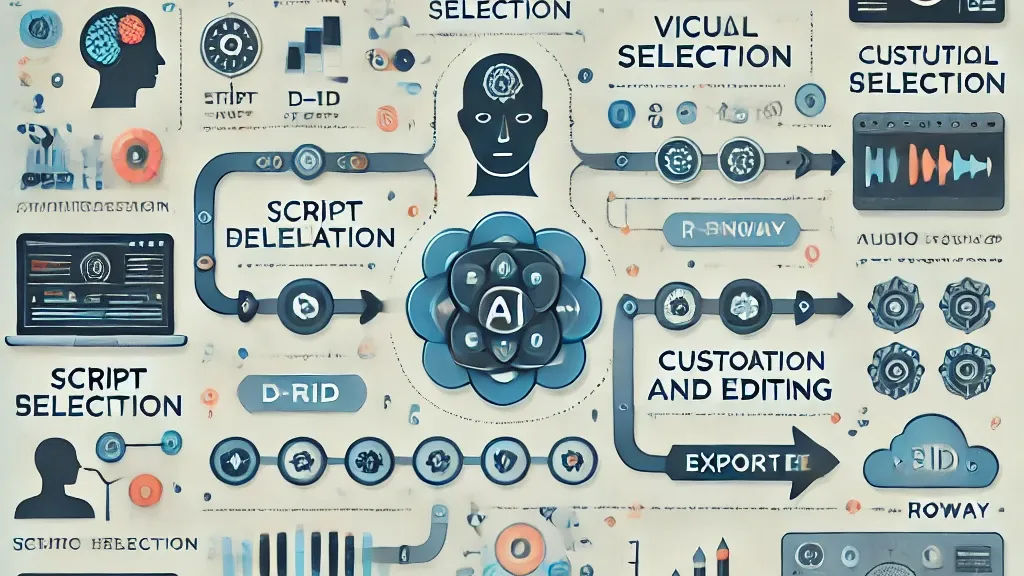
The business model is straightforward: offer a retainer service to busy creators or small businesses, promising a set number of polished, viral-ready clips per week. You are selling the outcome (increased engagement and reach) rather than the hours spent editing.
Social Media and SEO Optimization
Businesses are constantly fighting for visibility. While AI can write a blog post, a raw, unedited machine draft rarely ranks well or converts readers.
The opportunity lies in using AI as a research and drafting assistant. You can quickly generate SEO-friendly product descriptions, outline comprehensive content briefs, or draft email marketing sequences. The critical step is applying your human judgment to refine the tone, ensure factual accuracy, and align the content with the brand's voice. You are paid for the final, polished asset, not the initial draft.
The Scalable Agency: Owning the Outcome
Once you have mastered basic services, the next step is scaling your operations. This involves moving away from one-off tasks and building systems that generate recurring revenue.
The AI Automation Agency (AAA)
Small and medium-sized businesses (SMBs) are desperate to streamline their operations but often lack the technical expertise to implement automation. This is where an AI Automation Agency steps in.
Instead of selling a generic service, you analyze a company's specific workflow and build custom automations. This could involve setting up intelligent chatbots that handle customer inquiries, creating systems that automatically sort and summarize incoming leads, or developing internal tools that process invoices.
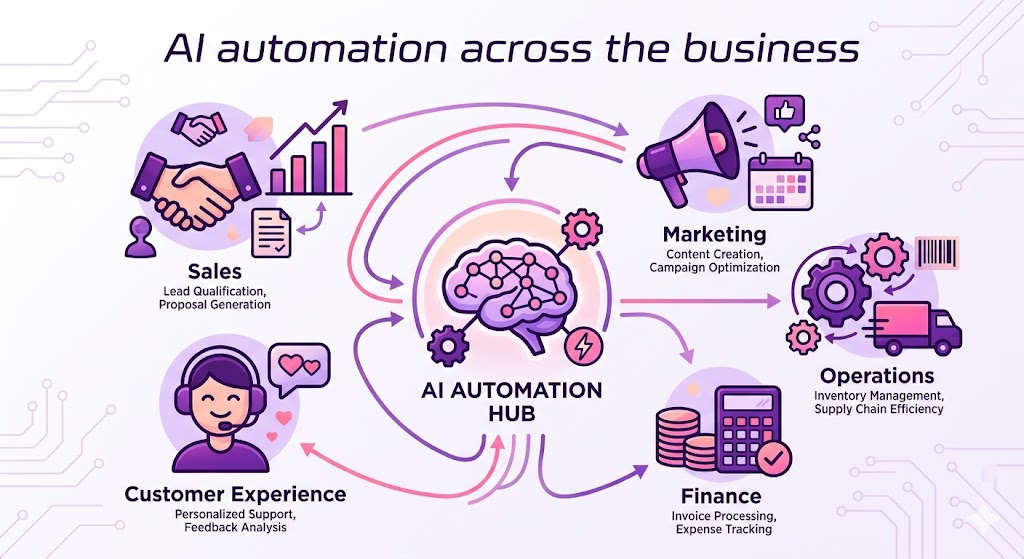
The monetization structure typically involves a one-time setup fee followed by a monthly maintenance retainer. Because these systems directly save the business time and money, the return on investment is clear, making it an easy sell.
Niche AI Agents and Custom Assistants
The era of the generic chatbot is over. In 2026, the focus is on highly specialized AI agents trained on specific, proprietary data.
Imagine building an AI assistant specifically for real estate agents that can instantly answer complex questions about local zoning laws, or a dietary bot tailored for individuals with specific food allergies. By gathering a deep knowledge base in a narrow niche, you can create a highly valuable tool.
These custom agents can be monetized in several ways:
1. Lead Generation: Offering the bot for free to pre-qualify leads for a high-ticket consulting service.
2. Subscription Access: Charging a monthly fee for access to the specialized knowledge base.
3. B2B Implementation: Building and licensing private agents for corporate clients.
The Multimedia Revolution: Voice and Avatars
The most significant shift in recent years has been the explosion of AI capabilities in audio and video generation. This has opened up entirely new avenues for monetization that require minimal physical production.
Voice Licensing and AI Dubbing
Voice cloning technology has reached a point where synthetic speech is virtually indistinguishable from a human recording. If you have a strong, clear speaking voice, you can license your digital likeness to platforms that generate audiobooks, corporate training materials, or video narration.
Furthermore, you can offer AI dubbing services to content creators looking to expand their reach into international markets. By automatically translating and dubbing videos into multiple languages, you provide a service that is significantly faster and more cost-effective than hiring traditional voice actors.
Faceless Content and Digital Clones
The concept of the "faceless channel" has evolved. Using AI avatars and synthetic voices, creators can produce high-quality video content without ever stepping in front of a camera.
This model allows for rapid content multiplication. A single script can be adapted and generated across multiple languages and regions simultaneously. While platform algorithms can be unpredictable, a well-executed network of automated channels can generate substantial revenue through advertising and affiliate marketing.
Building Long-Term Wealth: The Asset-Based Approach
The ultimate goal in the AI economy is to transition from trading time for money to building compounding assets. This requires a longer time horizon but offers the highest potential returns.
AI-Driven Niche E-commerce
The traditional dropshipping model has been heavily disrupted. The modern approach involves building hyper-niche, print-on-demand storefronts managed almost entirely by automated systems.

Entrepreneurs use AI to analyze social media trends and identify underserved markets. Image generation tools are then used to create unique designs for merchandise. AI website builders launch the storefront, while automated systems handle customer service inquiries and generate ad copy. Your role shifts from operator to overseer, managing the system rather than executing every task.
The Human-in-the-Loop (HITL) Advantage
As AI models become more complex, the need for high-quality training data increases. Companies are willing to pay a premium for human experts to label, categorize, and validate data sets.
This "Human-in-the-Loop" approach is critical for ensuring the accuracy and safety of advanced systems. While it may seem counterintuitive, the most valuable skill in an automated world is the ability to provide nuanced, human judgment that machines still lack.
Your 90-Day Action Plan
Transitioning into the AI economy can feel overwhelming. Here is a structured approach to get started:
1. Days 1-30: Skill Acquisition and Niche Selection. Choose one specific tool (e.g., an AI video editor or a workflow automation platform) and master it. Identify a narrow target audience that desperately needs the outcome that tool provides.
2. Days 31-60: Building the Offer and Outreach. Craft a compelling offer focused entirely on the result. Do not sell "AI services"; sell "10 extra hours a week" or "20% more qualified leads." Begin daily outreach to your target market.
3. Days 61-90: Systematization and Delivery. Secure your first clients and focus intensely on delivering exceptional results. Document your processes so you can eventually delegate the manual aspects of the work.
Conclusion
In 2026, making money with artificial intelligence is not about finding a magic prompt or a get-rich-quick scheme. It is about understanding leverage. The technology eliminates low-value, repetitive work and multiplies the impact of high-value, strategic thinking.
The winners in this new economy will be those who treat AI as a co-founder—a tireless assistant that handles the heavy lifting, allowing the human operator to focus on creativity, strategy, and relationship building. The opportunity is vast, but it requires execution, consistency, and a willingness to adapt. The future belongs to those who build it.