
Unleashing Hyper-Productivity: The Definitive Guide to the Best AI Tools of 2026
In an era defined by relentless innovation, the quest for enhanced productivity has never been more critical. As businesses and individuals navigate increasingly complex landscapes, Artificial Intelligence (AI) has emerged not merely as a technological advancement, but as a transformative partner in optimizing workflows and amplifying output. The year 2026 marks a significant milestone in this evolution, with AI productivity tools moving beyond rudimentary automation to offer sophisticated, intelligent assistance that redefines how we work, create, and collaborate.
This comprehensive guide delves into the cutting-edge of AI productivity, exploring the most impactful tools available today. We will dissect their functionalities, highlight their unique strengths, and provide insights into how they are empowering professionals across diverse sectors to achieve unprecedented levels of efficiency. From orchestrating complex tasks to generating creative content, managing knowledge, and streamlining communication, AI is no longer a futuristic concept but an indispensable component of the modern professional toolkit. Join us as we uncover the powerhouses that are shaping the future of work.
The AI Revolution in Productivity: A Paradigm Shift
The integration of AI into daily operations has ushered in a profound paradigm shift, fundamentally altering traditional work methodologies. What began with simple task automation has rapidly evolved into intelligent systems capable of complex reasoning, predictive analysis, and even creative generation. This evolution is driven by advancements in machine learning, natural language processing, and computer vision, enabling AI to understand context, learn from interactions, and perform tasks that once required significant human cognitive effort.
According to Microsoft's 2024 Work Trend Index, a staggering seventy-five percent of global knowledge workers now leverage generative AI, with adoption nearly doubling in just six months. This rapid embrace underscores a clear message: AI is no longer an optional enhancement but a core driver of competitive advantage. The focus has shifted from merely adopting AI to strategically integrating the right tools that seamlessly fit existing workflows, delivering tangible value and transforming hours into minutes.
Key Categories of AI Productivity Tools
The landscape of AI productivity tools is vast and continually expanding. To navigate this dynamic environment, we can categorize these tools based on their primary functions, each designed to address specific pain points and unlock new efficiencies.
1. AI Orchestration and Automation: Connecting the Digital Dots
AI tools excel at individual tasks, but their true potential is unleashed when they can communicate and collaborate. AI orchestration and automation platforms act as the central nervous system, connecting disparate applications and AI models to create seamless, intelligent workflows. These tools are crucial for enterprises struggling to integrate AI with their current tech stacks, providing a cohesive layer that coordinates interactions across various systems.
Zapier stands out as a leader in this category. Built to help over 8,000 apps and AI models work together, Zapier serves as a hub for everything from analyzing business data with AI to creating automated systems that react intelligently to real-time triggers. Its features include:
• Copilot: A natural language builder for automation, allowing users to describe desired workflows (e.g., "summarize new leads in Slack every morning") and have Copilot draft, connect, map data, and test the workflow automatically.
• AI by Zapier: Provides built-in access to large language models (LLMs) without requiring an API key, enabling data extraction, text generation, content summarization, and information analysis within automated workflows.
• Zapier Agents: Intelligent, self-directed AI teammates capable of multi-step actions across an entire tech stack. These agents can manage inboxes, draft emails, prepare reports, and operate autonomously across applications, even triggered via a Chrome extension.
• Chatbots by Zapier: Custom, no-code bots trained on proprietary content (e.g., help centers, websites) to answer questions, guide customers, or handle internal requests, with automatic updates to stay current.
• Tables: A flexible, spreadsheet-style database for storing, organizing, and updating data that automations and AI agents rely on, connecting directly to Zaps or AI workflows.
Zapier effectively acts as an AI productivity control center, enabling the connection and orchestration of AI models with real-world data across an organization's entire application ecosystem.
2. AI Chatbots and Conversational AI: Your Intelligent Dialogue Partners
AI chatbots allow users to interact with large language models in a conversational style, providing answers, generating content, writing code, and performing calculations. These tools have become ubiquitous, offering advanced reasoning and logic capabilities.
• ChatGPT: The industry leader that ignited the generative AI revolution. Its flexibility and ease of use make it invaluable for tasks ranging from writing marketing copy and conducting market research to drafting sales emails. Its integration with platforms like Zapier allows for sophisticated workflow orchestration, such as summarizing attendee feedback and generating personalized follow-up emails after an event.
• Claude: Anthropic's safe and creative chatbot, known for its ability to build "Artifacts"—interactive workspaces where users can draft websites, graphics, documents, or code in real-time. Claude excels in complex reasoning and document analysis, allowing users to upload lengthy papers or reports for summarization and iterative content creation.
• Meta AI: Integrated across Meta's social applications (Facebook, Instagram, WhatsApp, Messenger) and available as a standalone assistant. It leverages context from social data to tailor responses and can generate or edit images. While offering deep integration into the social ecosystem, users should be mindful of privacy implications due to its access to personal data.
3. AI Agents: From Conversation to Action
While chatbots facilitate dialogue, AI agents take the next step by actively performing tasks and automating complex workflows across an entire tech stack. These tools empower AI to go beyond conversation and execute actions, acting as intelligent teammates.
• Zapier Agents: As mentioned, these agents leverage Zapier's extensive integrations to take action across over 8,000 apps. Users can train agents by providing access to company data sources (e.g., HubSpot, Notion, Airtable) and define triggers, data processing rules, and actions. This enables agents to perform specific tasks like analyzing spreadsheets, searching the web, or drafting customer responses autonomously.
• Botpress: Designed for building robust, custom AI bots, Botpress combines prompts, knowledge bases, tools, and communication channels. While built with developers in mind, its visual builder and extensive options for data management and integrations make it suitable for creating serious bots for customer chats, internal workflows, or website concierges.
4. AI Search Engines: Reliable Information at Your Fingertips
Addressing the challenge of AI hallucinations, AI search engines integrate web searches directly into their functionality, using real-time results as sources to support AI-generated answers. This provides users with reliable, cited information.
• Perplexity: A frontrunner in AI search, known for its high-quality, cited answers. It combines Google's, Bing's, and proprietary ranking signals to base AI responses on the best available sources. Its "Deep Research" feature can perform multiple searches, consult numerous sources, and produce comprehensive reports in minutes, making it invaluable for researchers and professionals needing accurate, cited information quickly.
5. AI for Knowledge Management: Intelligent Organization and Retrieval
Integrating AI directly into knowledge management platforms transforms how teams organize, access, and leverage information. These tools embed AI capabilities within existing workspaces, eliminating the need to switch between applications.
• Notion AI: Adds AI features directly into Notion's versatile workspace, encompassing notes, databases, wikis, and project management. Users can ask questions about workspace content, generate meeting notes, draft documents, or summarize lengthy pages without leaving the platform. This deep integration ensures AI assistance is available where the team's knowledge resides.
6. AI for Calendar Management: Optimizing Your Time
AI-powered calendar management tools automate the scheduling of tasks and meetings, optimizing time based on priorities, deadlines, and availability. They free professionals from the manual burden of calendar organization.
• Motion: Utilizes AI to automatically schedule tasks and meetings. Users define what needs to be accomplished and by when, and Motion intelligently finds optimal time slots, protects focus time, and reschedules lower-priority items when conflicts arise. It acts as a personal AI assistant for day-to-day time management.
7. AI for Writing Assistance: Polishing Your Prose
AI writing assistants go beyond basic spell-checking, offering advanced grammar corrections, clarity improvements, and tone adjustments to ensure professional and impactful communication.
• Grammarly: A widely adopted tool that catches grammar mistakes, suggests clarity enhancements, and helps adjust the tone of writing. Its AI capabilities include full-sentence rewrites and plagiarism detection, working seamlessly across various platforms like email clients, Google Docs, and Slack via browser extensions and desktop apps.
8. AI for Visual Content Creation: Design Made Easy
AI has democratized graphic design, enabling non-designers to create professional visual content with ease. These tools combine intuitive interfaces with powerful AI generation capabilities.
• Canva: Integrates drag-and-drop design tools with its "Magic Studio," a suite of over 25 AI-powered features. This includes "Magic Write" for copywriting, "Magic Media" for image generation, and AI video creation. Canva empowers professionals and teams to produce high-quality graphics, presentations, and social media content without specialized design software.
9. AI for Meeting Transcription and Summarization: Focus on the Conversation
For teams inundated with meetings, AI tools offer a solution to the challenge of note-taking and information retention. These platforms automatically record, transcribe, and summarize discussions.
• Fireflies.ai: Records, transcribes, and summarizes meetings from platforms like Zoom, Google Meet, and Microsoft Teams. It generates searchable transcripts with AI-powered summaries that highlight action items and key decisions. This allows participants to focus on the conversation, and teams to easily reference past discussions without rewatching entire recordings.
10. AI for Full-Stack Application Development: Building with Natural Language
Emerging AI tools are even transforming the complex domain of software development, allowing users to build full-stack applications using natural language descriptions.
• Lovable: Translates natural language descriptions into complete full-stack web applications, including frontend UI, backend databases, authentication systems, and deployment infrastructure. It generates working React and TypeScript code that users fully own. Lovable offers "Agent Mode" for autonomous architecture planning and debugging, "Chat Mode" for collaborative refinement, and "Visual Edits" for direct interface modification, making it accessible to both entrepreneurs and technical builders.
Choosing the Right AI Productivity Tools
With such a diverse array of AI productivity tools available, selecting the right ones can seem daunting. The key is to identify your biggest time sinks and workflow bottlenecks rather than being swayed by the most exciting features. Consider the following:
• Identify Your Core Needs: Where do you spend the most time on repetitive or cognitively demanding tasks? Are you drowning in emails, struggling with content creation, or losing track of meeting discussions? Start by addressing these critical areas.
• Integration with Existing Systems: How well does the AI tool integrate with your current software ecosystem? Seamless integration is crucial to avoid creating new silos or increasing manual data transfer.
• Learning Curve and Ease of Use: Prioritize tools with low learning curves that deliver value quickly. The goal is to enhance productivity, not introduce new complexities.
• Scalability and Flexibility: Can the tool grow with your needs? Does it offer the flexibility to adapt to evolving workflows and requirements?
• Cost-Benefit Analysis: Evaluate pricing models against the potential time savings and efficiency gains. Many tools offer free tiers or trials, allowing you to test their efficacy before committing.
• Data Privacy and Security: Understand how the tool handles your data, especially for sensitive information. Ensure it complies with relevant privacy regulations and security standards.
For instance, a marketing professional might leverage Canva for visual content, Grammarly for copy refinement, and Zapier to automate lead nurturing. A researcher might combine Perplexity for rapid source gathering with Claude for synthesizing findings into client deliverables. The optimal stack is highly personalized.
The Future of AI in Productivity: Multi-Agent Systems and Vertical AI
The trajectory of AI in productivity points towards even more sophisticated and integrated systems. Two significant trends are poised to redefine the landscape:
Multi-Agent Systems (MAS)
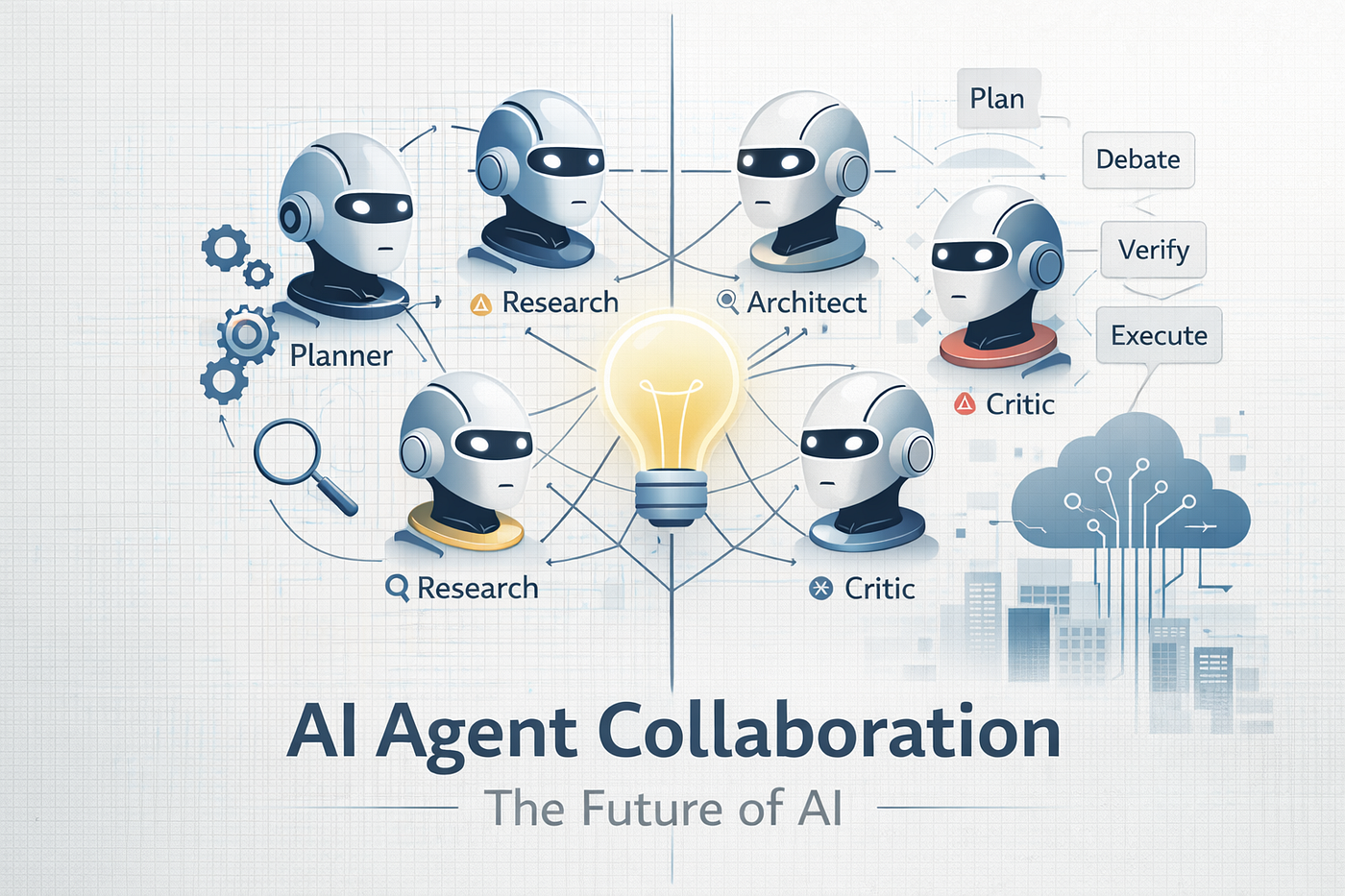
In 2026, AI agents and agentic workflows are fundamentally reshaping how work gets done. Instead of using AI as a reactive tool, employees are increasingly allocating tasks to multiple AI agents that collaborate to achieve defined goals. This shift moves human work away from routine execution and toward strategic oversight, decision-making, and creativity. IDC forecasts that by 2030, 45% of organizations will orchestrate AI agents at scale by embedding them across business functions.
A multi-agent system consists of multiple AI agents working collectively to perform tasks on behalf of a user or another system. This capability goes far beyond traditional chatbots by enabling AI to deliver higher-value, function-specific automation across business operations. Through MAS, AI can tackle large-scale, complex tasks by coordinating hundreds or even thousands of specialized agents working together.
For example, in healthcare, MAS can coordinate multiple AI agents to support complex workflows such as patient monitoring, diagnostics, treatment planning, and hospital operations. Each agent can focus on analyzing medical data, managing scheduling, or ensuring compliance. This collaborative AI approach promises unprecedented levels of automation and efficiency.
Vertical AI: Industry-Specific Intelligence
Another burgeoning trend is the rise of Vertical AI—industry-specific intelligence tailored to the unique demands of particular sectors. This moves beyond general-purpose AI to highly specialized models that understand the nuances and complexities of specific industries.
• Healthcare: AI is moving beyond experimental use cases into real-world, patient-facing applications. It supports symptom triage, treatment planning, and clinical decision support. Generative AI innovations are transitioning from controlled research environments to products and services accessible to millions of patients and clinicians worldwide. AI's growing role in documentation and care planning offers a scalable way to relieve system pressure while improving access and efficiency.
• Banking and Finance: This sector is a fast adopter of vertical AI, with 85% of institutions already using AI in at least one business area. Industry-specific AI models are reshaping financial services through hyper-personalization, driving higher digital engagement and revenue growth from tailored offers. Human-centered conversational AI is evolving to deliver more empathetic and personalized support, resolving a significant percentage of customer inquiries and saving billions in customer support costs.
These specialized AI applications promise to unlock efficiencies and innovations that general AI models cannot, by deeply understanding and addressing the specific challenges of each industry.
Conclusion
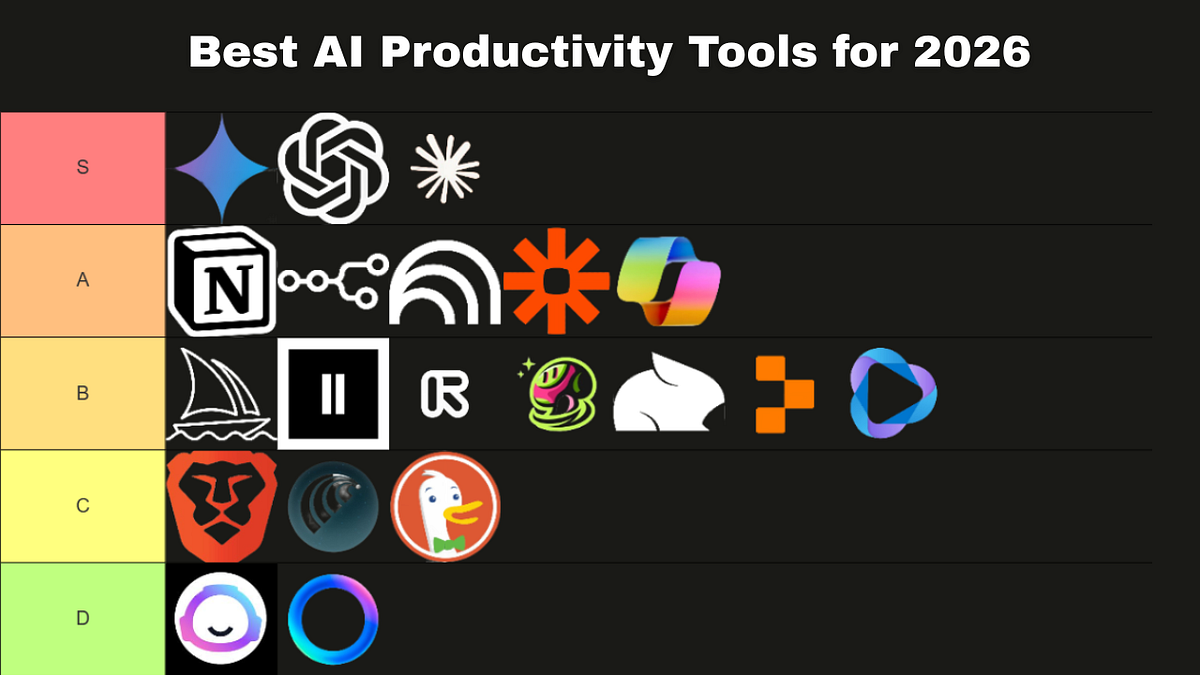
The journey through the landscape of AI productivity tools in 2026 reveals a vibrant ecosystem of innovation designed to empower individuals and organizations. From the foundational orchestration capabilities of Zapier to the intelligent conversational prowess of ChatGPT and Claude, the research-driven insights of Perplexity, and the transformative development potential of Lovable, AI is fundamentally reshaping the contours of productivity.
These tools are not just about doing more; they are about working smarter, fostering creativity, and enabling a deeper focus on strategic initiatives. The emergence of multi-agent systems and vertical AI further underscores a future where AI becomes an even more integrated, collaborative, and specialized partner in every facet of professional life. Embracing these advancements is no longer a luxury but a necessity for anyone seeking to thrive in the hyper-productive era of AI. The future of work is here, and it is intelligently augmented.